
A Faithless Understanding

No Faith Needed001

I remember sitting on the floor in my 8×13 storage room that I had rented and  converted into a bedroom/office in 2013. It had been 13 years since I had attempted to meditate. By meditation I mean sitting still and thinking about nothing. The main motivation for the attempt had nothing to do with believing any particular religious doctrine or having faith in something that could not be proven by science. I had meditated 13 years previous and had experienced definitive positive results. I was counting on a tried and true method of relieving the stress that had completely engulfed my life. It was the want to free myself from this stress that was the chief motivator. I meditated for about an hour and I remember calling my sister after I had finished and told her that I didn’t want to leave the place that I had traveled to in my mind. It was so beautiful and life fulfilling that I had no desire to be anywhere else.

I have continued this practice daily now for more than four years and have come to understand that faith is quite unnecessary. I read somewhere once that Carl Jung, the noted doctor who founded analytical psychology, when asked if he believed in God answered “No. I don’t believe, I know.” I have come to the same place as him.

In the consistent practice of silent thought clearing meditation no faith is required because during the meditation, once the mind and the body becomes stilled, you become a witness to the beauty of the eternal pulsating love-energy that is God’s creation unfolding right in front of you. Any questions as to- how do I know this is true?- disappears when you are immersed in and become a part of the creative act itself. For one to “need” faith they first have to experience doubt. Doubt is the product of statements such as: ‘All my bodily perceptions are telling me that this can’t be true.’ There is no urge to doubt when God’s love-energy is pulsating in every fiber of your being. Without doubt, faith has no purpose!

Consider all the years of religious indoctrination. All the religious services that I had attended with my parents as a child growing up in the Midwestern US, and continued to attend as an adult. All the efforts made to get me (and billions of others) to have faith and believe in something that was invisible, when all I had to do was sit still, follow my breath, and clear my mind in meditation, and the invisible became visible and known as a matter of course.

Trillions of words spoken, written, and sung, shoved in front of me for half a century. Words assembled in reasonably fashioned sentences to create reasons to overcome doubt, and it was the words themselves that distracted me from the God that was right before me and can be known in the silence. The Sufi Poet Hakim Sanai discovered this  900 years ago:

We tried reasoning

our way to him 

it did not work

the moment we gave up

no obstacle remained.


He introduced himself to us out of kindness:

How else could we have known him?

Reason took us as far as the door

but it was his presence that let us in.                                                                              (Hakim Sanai , Walled Garden of Truth, approx. 1100 AD)


A Chinese emperor’s librarian, Lao Tzu wrote about this 2600 years ago:

Can you step back from you own mind
and thus understand all things?

Empty your mind of all thoughts.
Let your heart be at peace.
(Lao Tzu, Tao Te Ching, Ch 10/16, Mitchell, Harper Collins 1988)

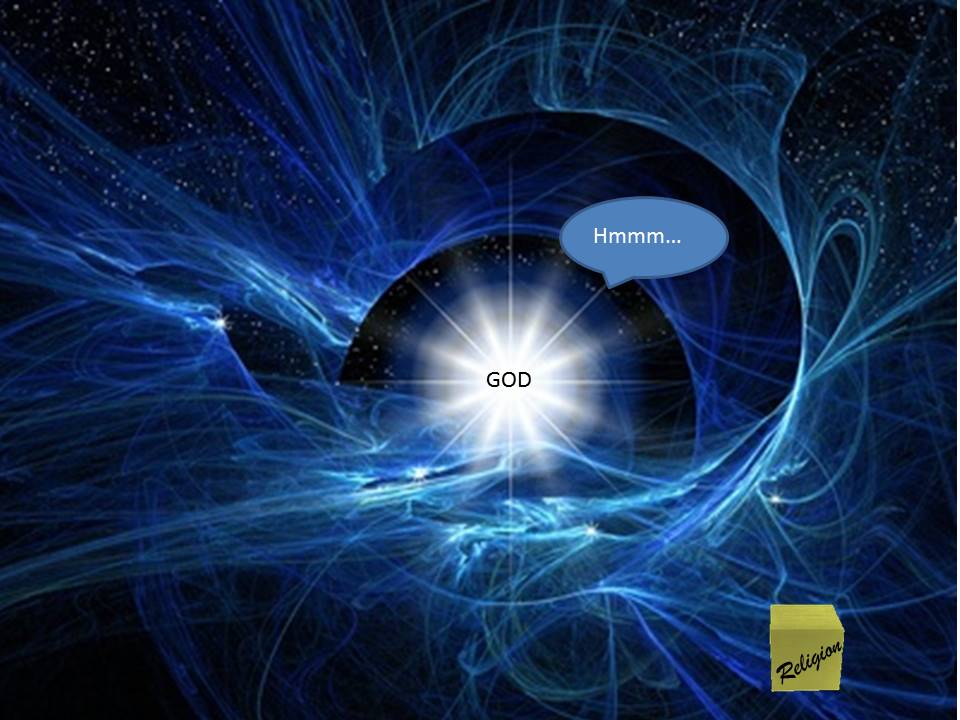
I was never taught this when I was in school. Considering the positive healing effects for people of all ages, why was this not being taught in our schools? Is it possible that those who were deciding what should be taught to us were afraid of what would happen if we found out that we could experience worry free peace all by ourselves? Satisfaction, contentment, and calm, without running out to buy anything or consume anything, Hmmm….. – I bet that would put a serious damper on the corporations whose very existence depends on us being “needy, greedy consumers”.

A few years ago, my youngest son said to me that he didn’t believe in god or religion anymore and apologized to me, “I don’t want to upset you.” I laughed for a moment and then responded, “I don’t give a tinker’s damn if you believe in a god or ever step into a church again. My only concern is – do you know peace. I am glad that you have tossed aside the box that others were trying to put you in. Now you can get down to the business of discovering yourself!”

Copyright © Guy Schell 2025


Divine Messengers


Messenger


I was approached by a college student from a neighboring Christian University after our meditation.

Student: “I don’t like your meditations. You are not praying to God. You are not spreading the message of Jesus to the world as God commanded us to do. You just sit silent.”

Me:  “The message of Jesus has been spread to the world through the words of Lao Tzu, Buddha, Krishna, Zoroaster, Dogen Zenji, and Israel’s prophets. Jesus came to re-establish, confirm, and remind, us of His former colleague’s words.”

Student: “I don’t believe in those false prophets. Jesus said, “No one comes to the Father except through me.”

Me: “I see you have come to a point of excellence in your thought for the words of Jesus ring true in this moment through you. When you quote the Christian scriptures I recognize Jesus through you. The same is true when I hear people quote scriptures from those I have previously mentioned. The Jesus that is in them is easily recognized through them. No one can experience lasting peace until they have experienced the Divine that some call Jesus that rest in each living being. As a Christian you believe that God is the Creator of all things. Please tell me which of these people whom I have mentioned that are not graced with the touch of the Divine?“

When the world is not suffering from human initiation then the vision provided through Israel’s prophets and the testimony of Jesus will have been fulfilled.

The Tao and Catholicism

The box of Religion 002


Two things come to mind this morning as I have been of late reviewing Stephen Mitchell’s translation of the Tao Te Ching.

One is a conversation I had with my mother many years ago. My mother was hardly a saint but was a tenacious searcher for the truth. She was raised in the Apologetic Catholic tradition. This is the theology that was spread through the Baltimore Catechism in the early 20th century and is still broadcasted by many Catholic Bishops in the US today. This is the theology that I have been referring to lately as the “no way out” theology in that it demands strict adherence to Catholic Doctrines but provides no clear understanding to the paradoxical statement issued by the apostle Paul in Roman’s 15: 19 – “I do not do the good that I want, but I do the evil that I do not want”. In my mother’s search for truth, once she became confined by the stringencies of the teachings of her own tradition, she began to step out of the box that was created for her by religious conservatives and experienced an intimacy with her Creator.

I called her on the phone one day and I don’t remember how we came to talk about the dynamics of prayer but we did. She said something that resonated with me for decades to come. “Sometimes you pray and pray for something for so long and it never comes. Eventually, out of mental exhaustion, you stop praying for it and decide that you don’t want it anymore. This is usually about the time that it falls right into your lap.”

It was not until I began to embrace the Eastern scriptures such as the Tao Te Ching that I found that this phenomenon is clearly marked. My mother did not give up her longing for this good thing to happen. She gave up her wanting, her desire for it to happen in her terms. She gave up determining when, where, and how, it would happen. Once she let go of the wanting, which was the cause of continual anxiety for her, once she gave up the desire and accepted the way things were, not only did her anxiety dissolve but she experienced peace.  With no obstacle remaining to prevent God from working in her life, the good fell right in her lap. As is stated in the Tao:


If you want to be given everything

Give everything up. (Tao V.22)


Be content with what you have;

rejoice in the way things are.

When you realize that nothing is lacking,

the whole world belongs to you. (Tao V.44)


Jesus continues in that same vein in Mathews Gospel 600 years after the Tao was written.


But seek first the kingdom [of God] and his righteousness,

and all these things will be given you besides.

Do not worry about tomorrow; tomorrow will take care of itself.

(Mt 6:33-34)


The second thing that comes to mind relates in that as Catholic Christians we were taught that perspectives of God that came from other religious traditions were not valid and even dangerous to our well-being. I had a Catholic women recently claim to me that the Buddha was a false prophet.

One of my sisters said to me once that she believed that after we die we are somehow able to finish those things left undone. When I heard this I smiled. I began thinking that this was at heart the Hindu doctrine of reincarnation. This is such a beautiful thought.

Unable to reconcile the idea that a loving God could send us to a place where we would suffer for eternity (Hell), my sister, like my mother, stepped outside the box of her Catholic upbringing. She imagined a God that always loves us and created a space where we could “try again” to be compassionately involved in creation.


The limits of Religion

We have to put religion in an appropriate box. We must never allow religion to put us or the infinite in a box. If we do not prepare a box for religion it will box itself and some extremist will try to jam people into it. What happens when you put to many people in a box?

Cat Box

Who Am I?

This writing is dedicated to my cousin Brian K. who has often been a shining light in my life.


who-am-i-photo001


                 This article was written in response to a question posed to me by a friend. His question came as a response to an excerpt from the Tao Te Ching I posted on a social website which reads:               

“Hope and fear are both phantoms
that arise from thinking of the self.
When we don’t see the self as self,
what do we have to fear?” (Tao Ch:13)1


After reading the excerpt my friend asked: “If we don’t see the self as self, then what are we?”

                This question often comes to front and center when people reflect on their meditative practice. This is the beginning of the walk on a path that leads to spiritual and mental realization.  

Who are we?

                From the time of our conception we are formed by our social surroundings or what some call conditioned by our outer environment. The influence of our parents, or lack of parents, the influence of our siblings, the influence of our community, the churches we attended or did not attend, our teachers, mentors, civil authorities and political leaders, the movies we watch, the music we listen to, the books we read, the advertisement that we are bombarded with, basically everything in our outer environment, along with some personal choices, play apart in creating our personal identities.  

                If someone asks you who you are, how would you respond? I have heard people respond with reciting their name, “I am Jane Doe. I am a part of the Doe Family.” If they are at their work they may respond with their job title, “I’m a truck driver for Nestles.” If in a foreign country perhaps the response would be, “I’m an American.” At a sporting event the response may be, “I am a Blues fan.” In reference to a belief system one may respond, “I am a Christian” or, “I am an atheist”, etc. When we identify ourselves in this way we are speaking out of our personal histories exposing the influences from our past conditioning. In these histories is the story of the self.

                These self identifiers can be known as “tags”. These tags come with mental attachments and learned patterns of thought. We cling to these patterns dearly because these patterns, in a large way, are us. As we cling to them, many are oblivious to the notion that these “tags” can be confining to our growth. By the time we are adults we are covered with so many tags, many of which we did not choose for ourselves, that we have smothered any true sense of who we really are. “Is this really me or is this who others convinced me that I am? Is there a genuine, pure me underneath all this?”

                I often ask people within our meditation groups, “If you could swipe the mind clean of all past influences, family, country, religion, all of it, who would you be?” There must be something there because when you close your eyes and remove the thoughts from the mind something remains. What remains is the authentic you.


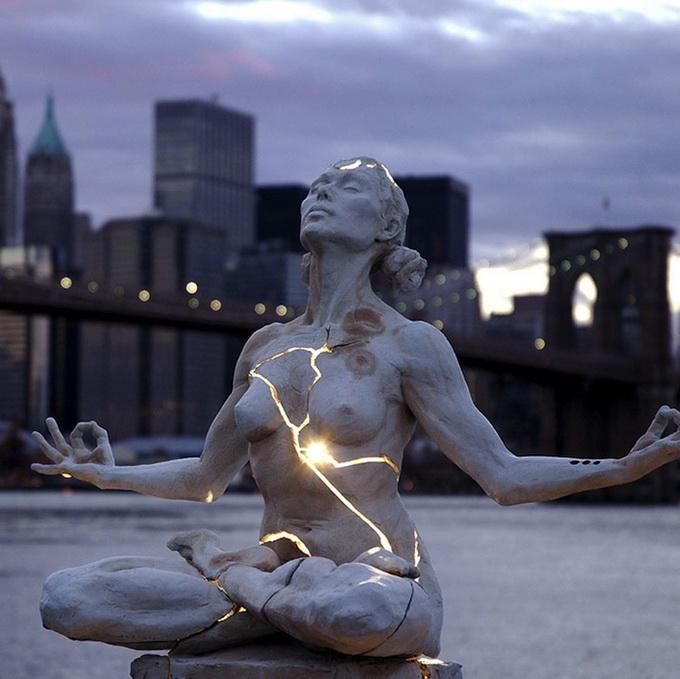
                                              The authentication of Paige Bradley 

paige-bradley-001                

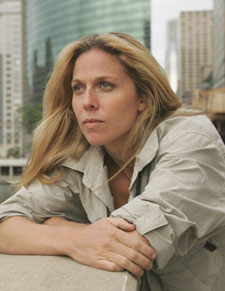
                The virtuoso sculptor Paige Bradley (pictured above) describes this in a fashion that beckons my humbleness. In an attempt to remove the confines of the conditioned perceptions of her past she shatters a sculpture that she had been working on for months. She began piecing the fragments back together resulting in a work of art that clearly displays the light of the pure self inside of her and each of us.

07-23-16-001-light-shinning-through-nyc

In her own poignant words she explains:

“From the moment we are born, the world tends to have a box already built for us to fit inside. Our umbilical cord never seems to be severed; we only find new needs to fill. If we disconnected and severed our attachments, would we shatter our confinements and expand beyond our shell? Would the world look different? Would we recognize ourselves? Are we the box that we are inside, and to be authentically ‘un-contained’ would we still be able to exist? This is the irony of containment. As long as we don’t push on the walls of our surroundings, we may never know how strong we really are.”

To view the original article and more about the Artist Paige Bradley click here .

Realizing who you are

                Lao Tzu, in the scripture reading quoted above, is separating the ordinary egoic self from the genuine self. When one privileges the tags that compose our understanding of the self over our obvious connection to all life, the world, and the divine essence of our Source, we begin to lose our true sense of self. As the practice of mind clearing meditation becomes habitual you start to peel away these layers of attachments that previously defined you. Simultaneously you begin reformatting your mind in a way that dissolves negative thought patterns and continues to bring your awareness back to your connection with the “big picture” of life. The egoic self shrinks and the genuine self expands. In some cases during these meditative episodes you no longer “see the self as self” but experience your being as fussed with  all else that is. This is what the Hindu scriptures call self-realization. Your thinking becomes less “me” centered or human centered and becomes Source centered. Hence, the stanza that completes chapter 13 of the Tao states:  

“See the world as your self.
Have faith in the way things are.
Love the world as your self;
then you can care for all things.”1

                In the Christian scriptures, Jesus addresses egoic or human centered thought quit plainly in Mathew’s gospel. In this story Jesus informs his followers that he soon will suffer and be killed at the hands of Jewish elders. Peter, in an inflation of the egoic self, criticizes Jesus and arrogantly proceeds to tell Jesus how God should be involved with His people. The passage that includes Peter’s rebuke is as follows:

                 “Then Peter took him aside and began to rebuke him, “God forbid, Lord! No such thing shall ever happen to you.” He turned and said to Peter, “Get behind me, Satan! You are an obstacle to me. You are thinking not as God does, but as human beings do.” (Mat 16:23-24 NAB)

Then Jesus returns to the other followers who were there and reminds them of the sentiments of Lao Tzu;

               “Whoever wishes to come after me must deny himself”                                               

                Please keep in mind that Lao Tzu is not preoccupied with judgments of right or wrong. Lao Tzu’s focus is psychological. He is pointing to that which happens in the mind that robs a person of contentment and peace. Is it wrong to identify ourselves by our family name or by our country of origin? Not necessarily. If we could retrace our family lineage back to before the beginning of time there also would be our Source.

               I will close with Chapter 16 of the Tao Te Ching. Perhaps this will put this writing in perspective:

“Empty your mind of all thoughts.
Let your heart be at peace.
Watch the turmoil of beings,
but contemplate their return.

Each separate being in the universe
returns to the common source.
Returning to the source is serenity.

If you don’t realize the source,
you stumble in confusion and sorrow. 
When you realize where you come from,
you naturally become tolerant,
disinterested, amused,
kindhearted as a grandmother,
dignified as a king.
Immersed in the wonder of the Tao,
you can deal with whatever life brings you,
and when death comes, you are ready.”1

Notes:

1.All quotes from the Tao Te Ching have been retrieved from: Tao Te Ching: A new English Translation, Stephen Mitchell, Harper Collins, 2009


The Law of Love in Our Hearts

love-in-our-hearts001  

One of the many benefits gained by people who regularly set down the busyness of their lives to practice thought clearing meditation is that you become equipped with the ability to place a mental space between you and negative thought cycles. As this is happening spontaneously your physical and mental sensations expand to include sensing the life around you.

In the environment outside of ourselves people and things are ordinarily perceived and defined by their differences. Within the stillness of our inner environment, once your eyes are closed and your mind is clear, thoughts that recognize differences begin to fade and the commonalities between you and others becomes enhanced. People often forget that humans have much more in common than they do differences. In this sacred environment you begin to experience people on a level playing field with equal value and equal capabilities. As your senses expand to include the life that surrounds you, you begin to merge with others and consider them as part of yourself. In this “inclusiveness experience” written laws that govern our actions become quite unnecessary in light of the fact that we are all connected and to harm another would only cause harm to one’s self. Caring for and protecting the environment that surrounds you and the people in it becomes a matter of course.

This understanding is not new but has been expressed throughout history in the sacred scriptures of many of the spiritual traditions that have induced devotion. It is defined as the law imprinted in each person heart. From the Chinese tradition it is stated in the Taoist scriptures:

“If powerful men and women
could remain centered in the Tao (the Infinite),
all things would be in harmony.
The world would become a paradise.
All people would be at peace,
and the law would be written in their hearts.” (Tao Te Ching V.32)

It was recognized in the Hebrew tradition through the prophet Jeremiah:

“This is the covenant I will make with the people of Israel
after that time,” declares the Lord.
“ I will put my law in their minds
and write it on their hearts.
I will be their God,
and they will be my people.
No longer will they teach their neighbor,
or say to one another, ‘Know the Lord,’
because they will all know me,
from the least of them to the greatest,” (Jeremiah 31: 33-34, NIV)

These two writings appeared in different parts of the world around 2600 years ago. This weave of similar ideas cropping up in many spiritual traditions across the world not only reinforces the connection between all forms of life but indicates that life itself is the product of the same Source even though people use different labels to describe it.